
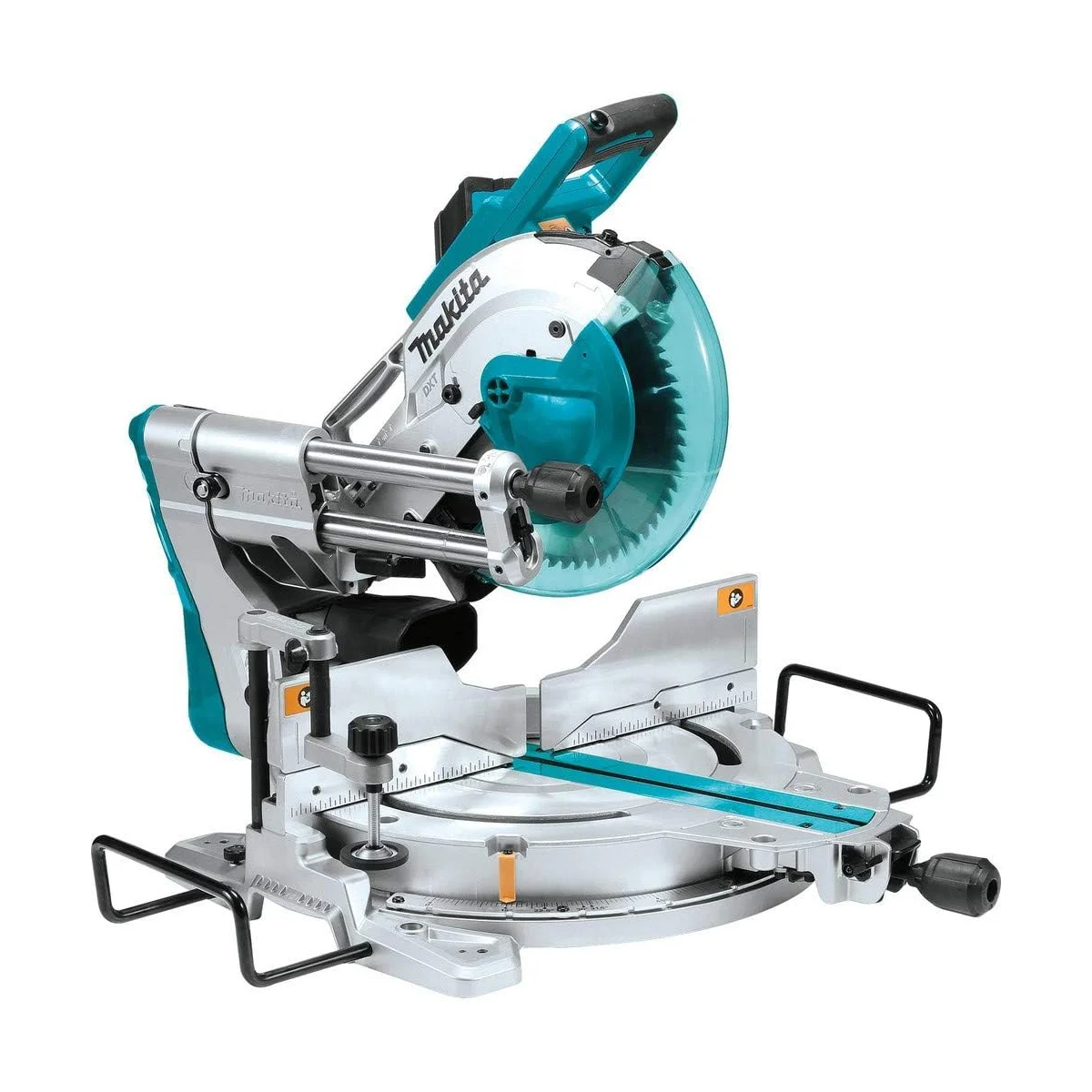
The Makita LS1019L wins because it solves the two problems that plague most sliding miter saws at once: dust and floor space. Mason Woodshop ran it head to head against the Festool Kapex on 3/4-inch MDF, the dustiest material a saw can face, and the Makita's twin rubber shrouds funneled nearly all of it into the vacuum. He called the result best in class, and that came from a reviewer who owns the Festool. The forward rail design is the other half of the story. Traditional sliders like the DeWalt DWS780 need about 52 inches of front-to-back clearance, so they live in the middle of the shop. The Makita slides on rails that face forward, which lets it tuck close to a wall and frees up a workbench.
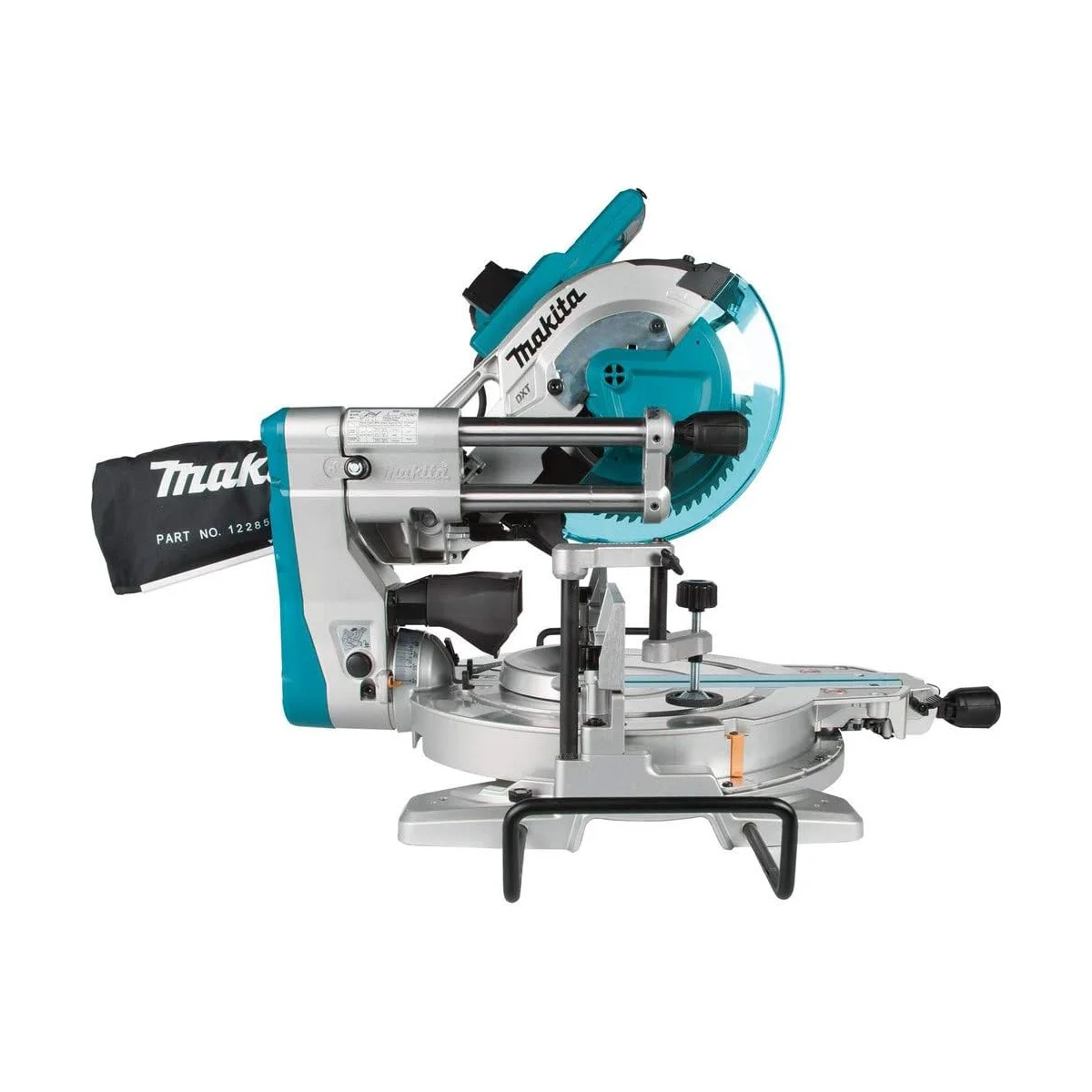
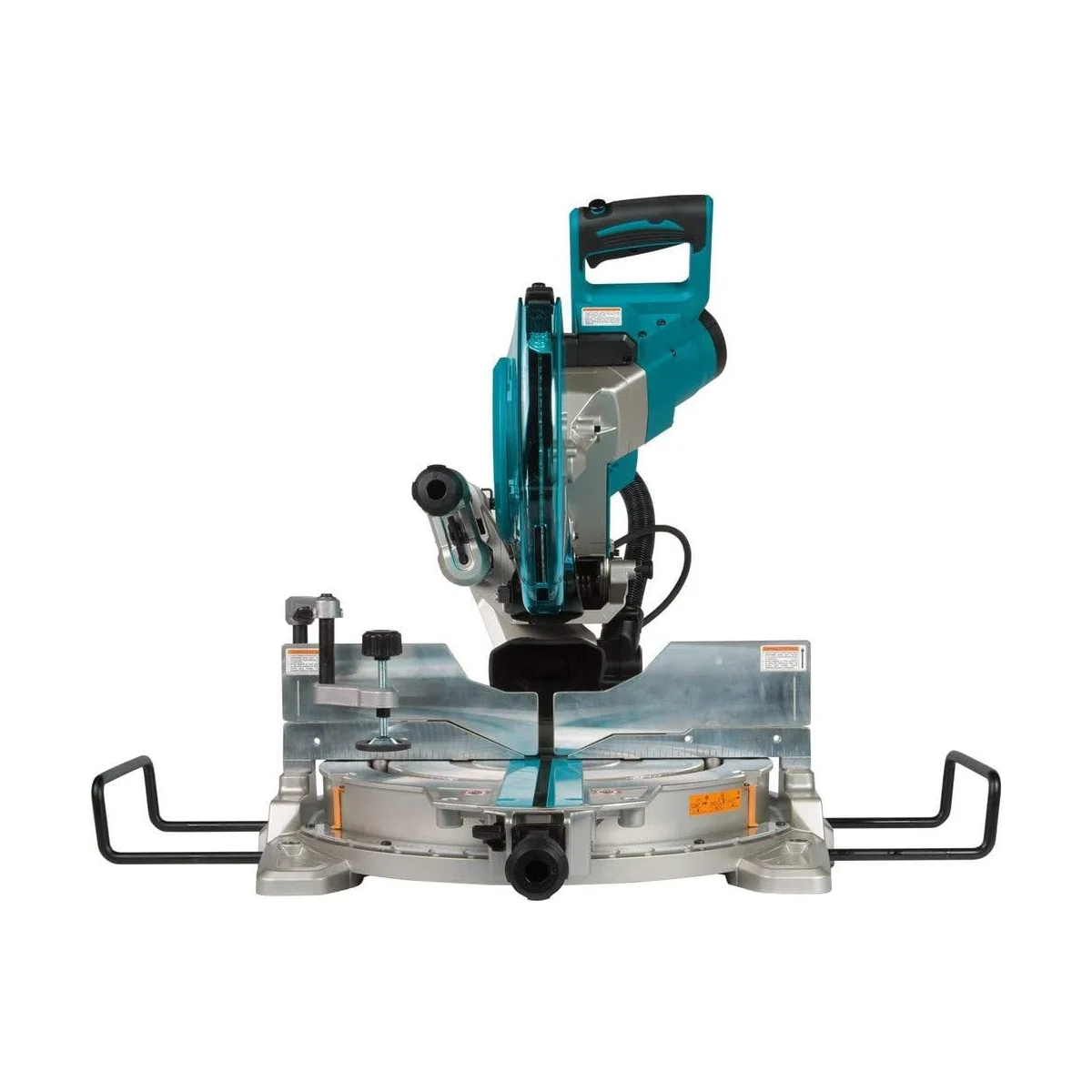
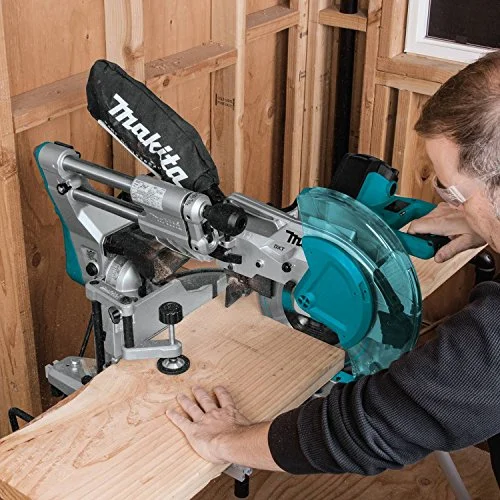
Capacity backs up the convenience. The LS1019L cuts up to 4-1/4 inches tall against the fence using its special cutting position, so most baseboard and crown stock fits standing up, and it crosscuts a full 12 inches wide for a 10-inch saw. Makita built it for people who move tools, which is why The Den of Tools pegged it as the saw traveling cabinet makers reach for first.
We left the Festool Kapex out of the top spot on purpose. It scores higher on paper, and Mason Woodshop calls it the apex of miter saws, but at roughly $1,799 it costs about triple a premium mainstream saw. He says it himself: the Kapex is overkill for nine of ten buyers. The Makita delivers most of that precision and the same forward-rail footprint for a price a serious non-professional will actually pay.
What It Won't Do
The forward rails do not let it sit perfectly flush to a wall. Mason Woodshop found that once you hook up a vacuum hose, the dust port sticks out 2 to 3 inches past the back of the saw, so you lose some of the space the design promises. He also caught the metal table tapering down slightly toward the edges instead of staying dead flat, and the hold-down clamp needs tedious screwing to lock material in place. None of these ruin a cut, but they are the kind of rough edges you notice every day.
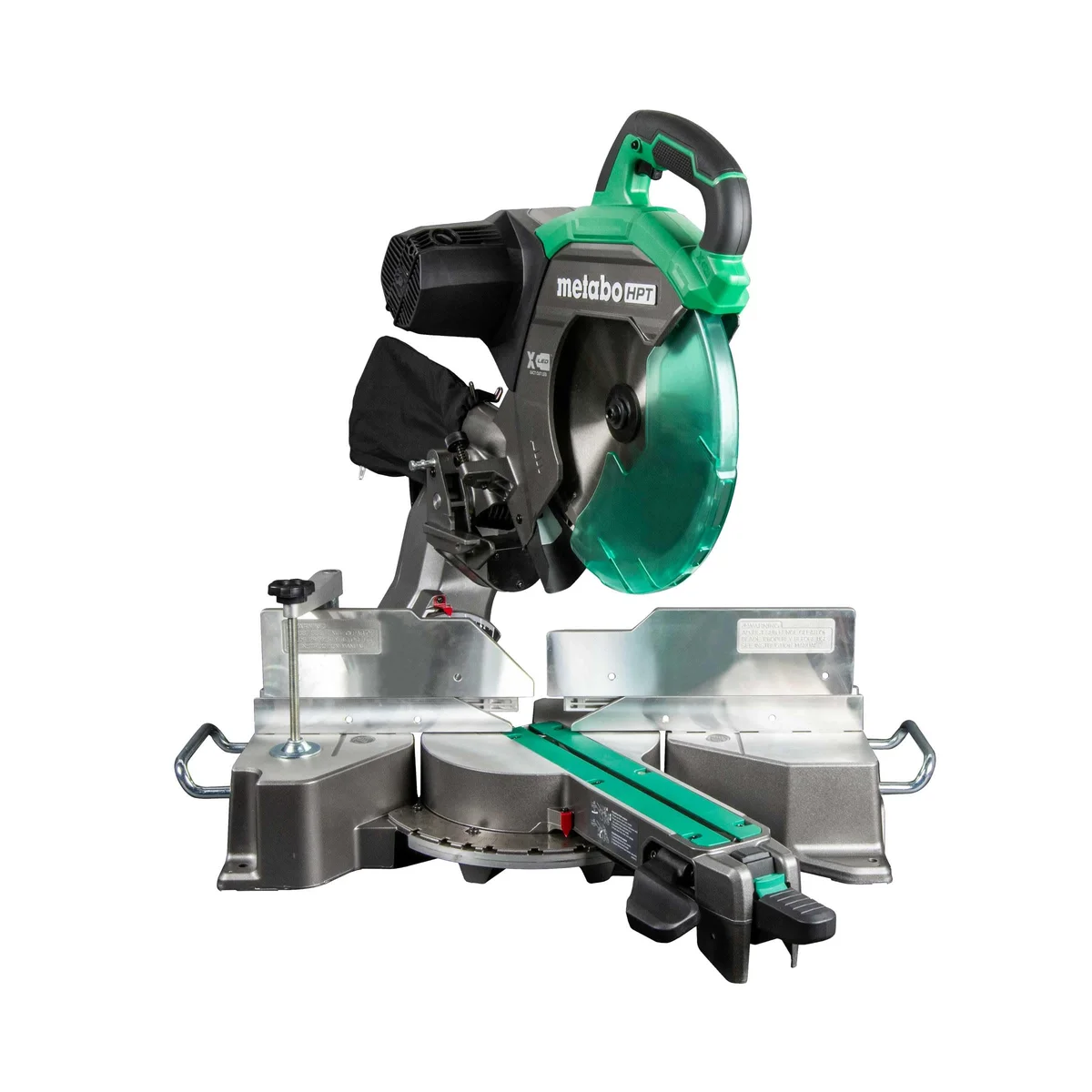
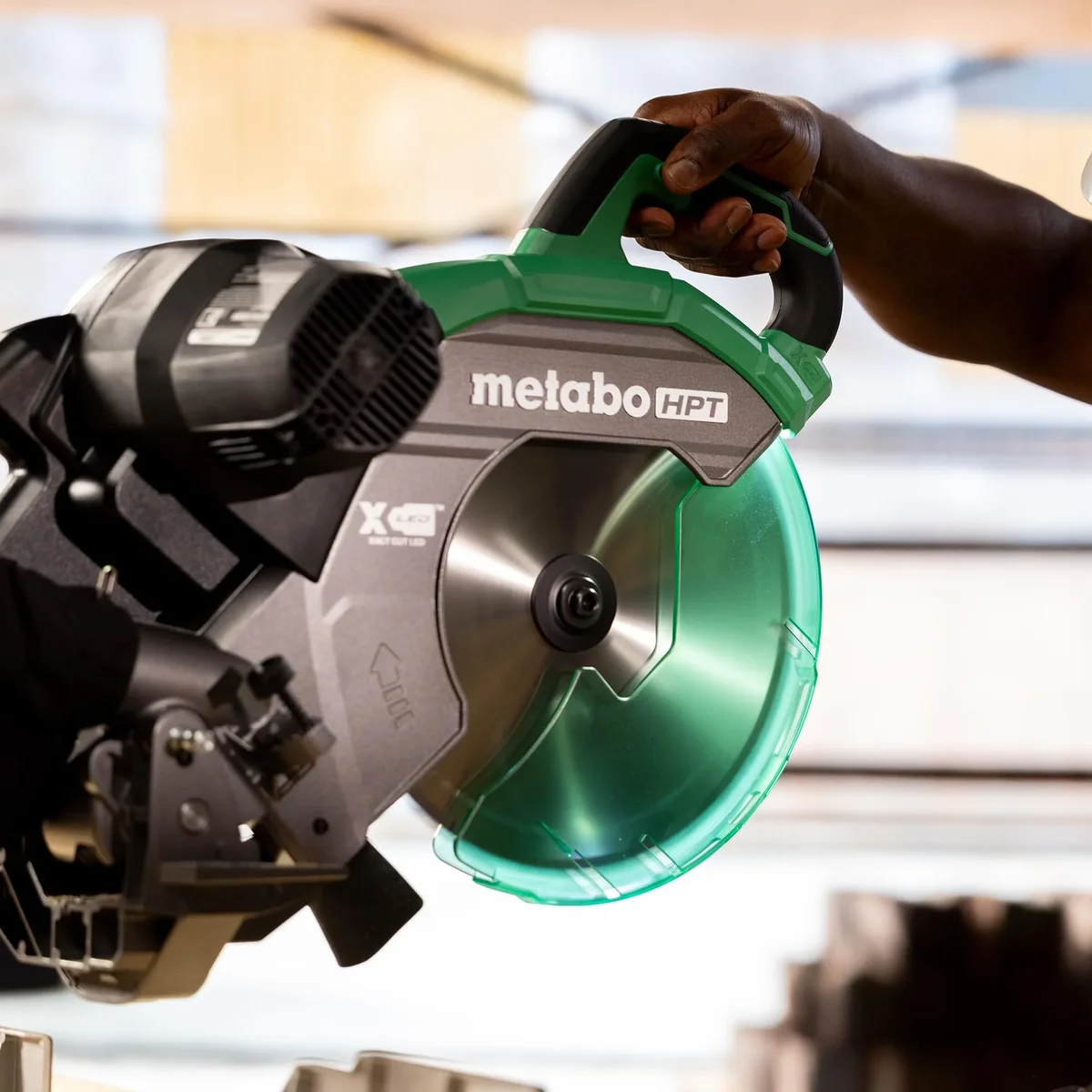
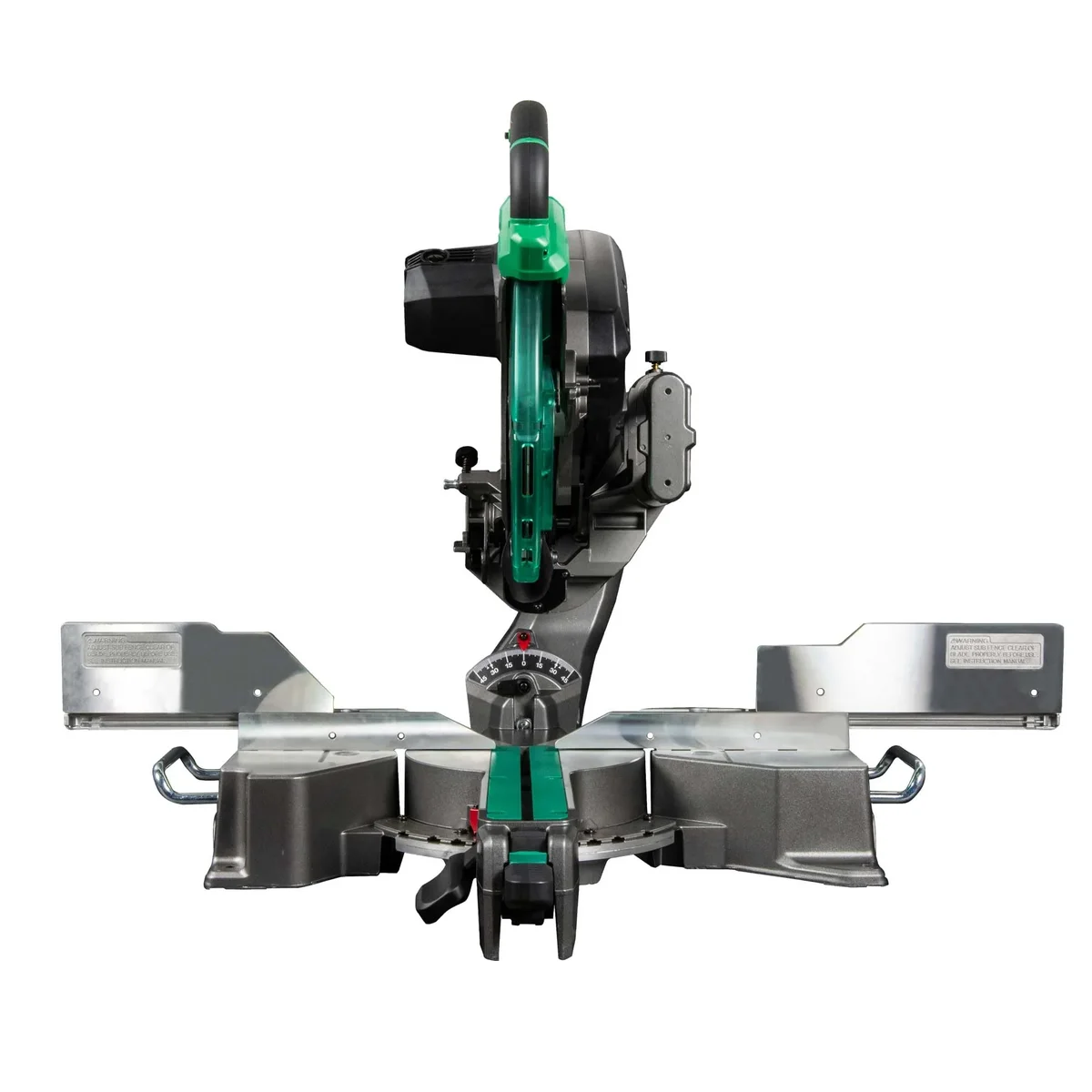
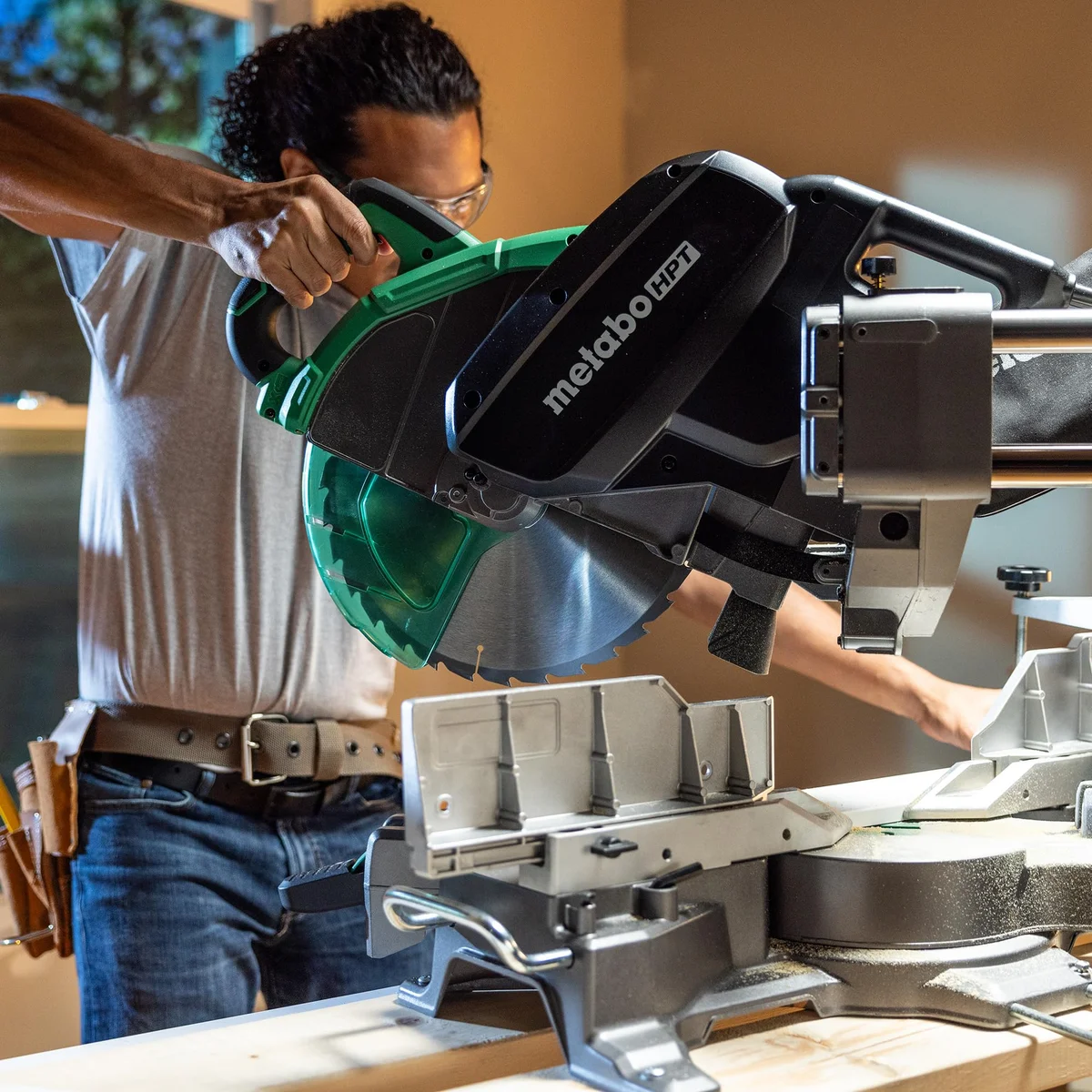
The Metabo HPT C12RSH3 borrows the one feature that makes the $799 Makita special and sells it for $449. The Den of Tools, who crowned it his bang-for-buck home-run saw, points straight at the forward-facing zero-rear-clearance rails: the same wall-hugging slide system as the Makita, on a 12-inch saw, at a mid-tier price. Metabo also swapped the old laser for an LED drop-shadow cutline that traces the exact blade kerf, which is a feature you usually pay premium money for. Then there is the warranty. You get five years standard, where the rival Hercules at Harbor Freight makes you buy a separate plan to match that coverage. For framing, deck work, and general trim, that combination is hard to beat at the price.
What It Won't Do
Lean on the handle and the cut wanders. The Den of Tools was blunt about it: the Metabo deflects off square if you push the saw instead of letting the blade do the work, so it cannot match premium-tier precision on fine joinery. It also ships with thin wire supports rather than solid flat table extensions, so long stock has nothing real to rest on. Treat it as a fast production saw, not a finish-cabinetry tool, and the flaws stop mattering.
Who Should Buy Which
Makita LS1019L 10-Inch Dual-Bevel Sliding Compound Miter Saw
Best-in-class dust collection in a space-saving slider
- Trim carpenters and woodworkers who want premium accuracy
- Anyone running a saw against a wall in a tight shop
- Buyers who hook up a vacuum and care about dust control
- Pros who carry a saw between job sites
- People comfortable spending close to $800 for the long haul
Metabo HPT C12RSH3 12-Inch Dual-Bevel Sliding Compound Miter Saw
Premium forward rails and a 5-year warranty at a mid-tier price
- DIYers and budget-minded pros doing framing and trim
- Anyone who wants forward-rail space savings under $500
- Deck builders cutting volume rather than fine joints
- Buyers who value a long 5-year warranty
- Shops that need a 12-inch blade without a premium price