The Best Multimeters
Verified by
 Ryan V. Editor-in-Chief
When you purchase through links on our site, we may earn an affiliate commission.
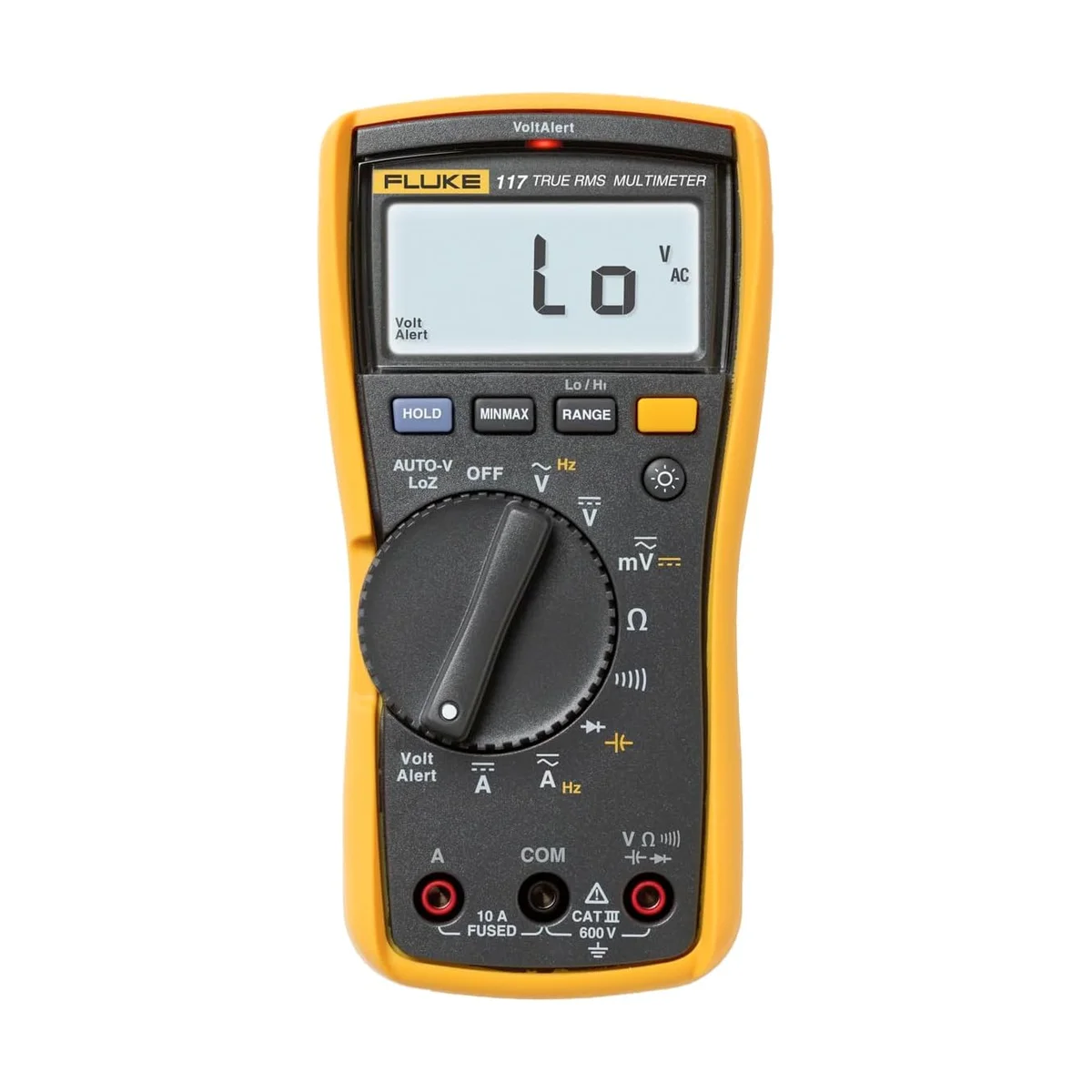
The Fluke 117 is the meter that hangs on more electricians' hips than any other, and our sources back that up. It appeared in four of the seven reviews we synthesized, TechGearLab handed it the highest lab score in their test at 81 out of 100, and Pro Tool Reviews called it the Best Fluke for the working trade.
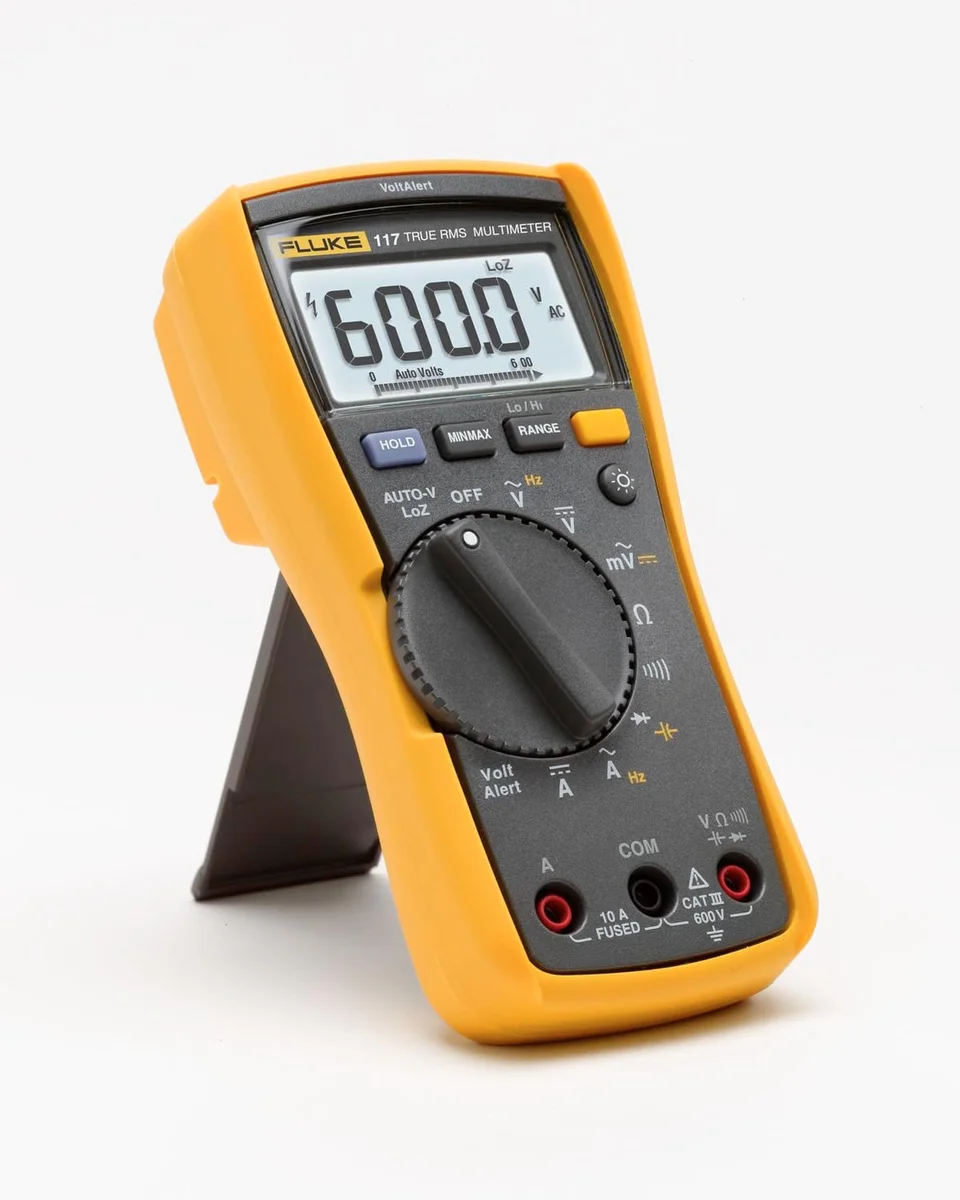
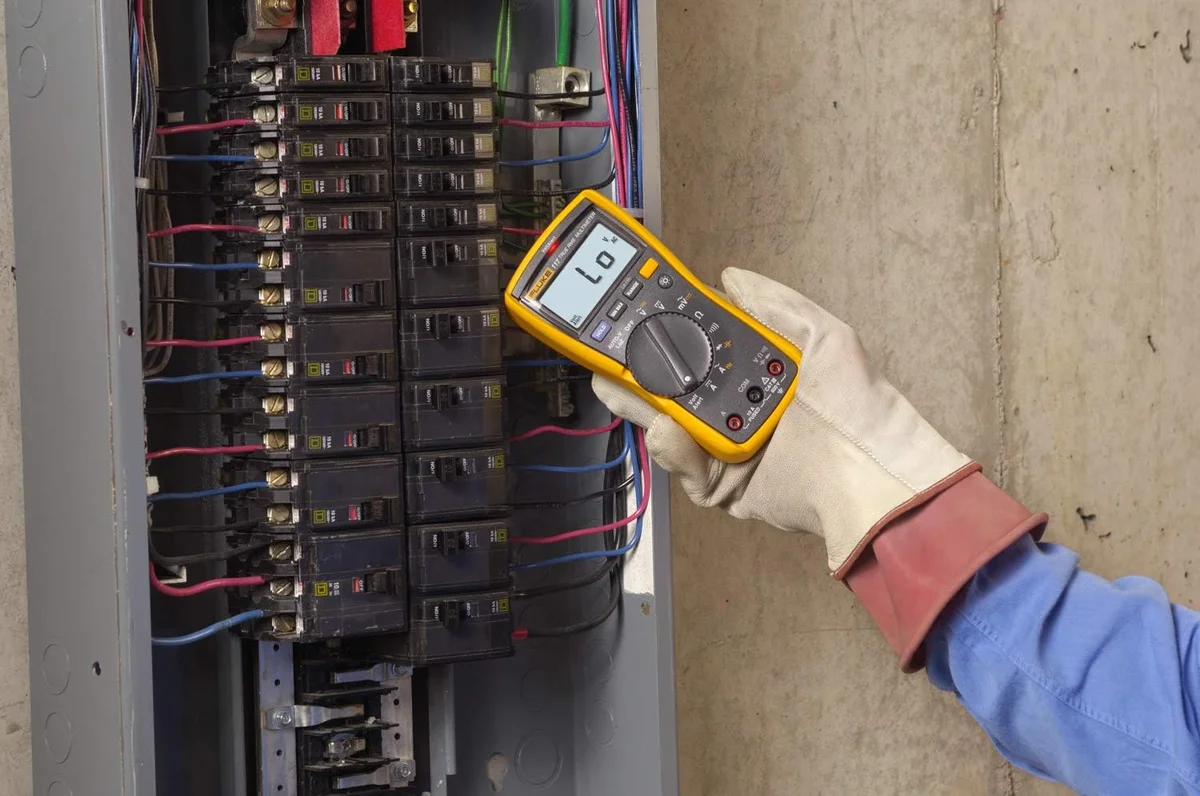
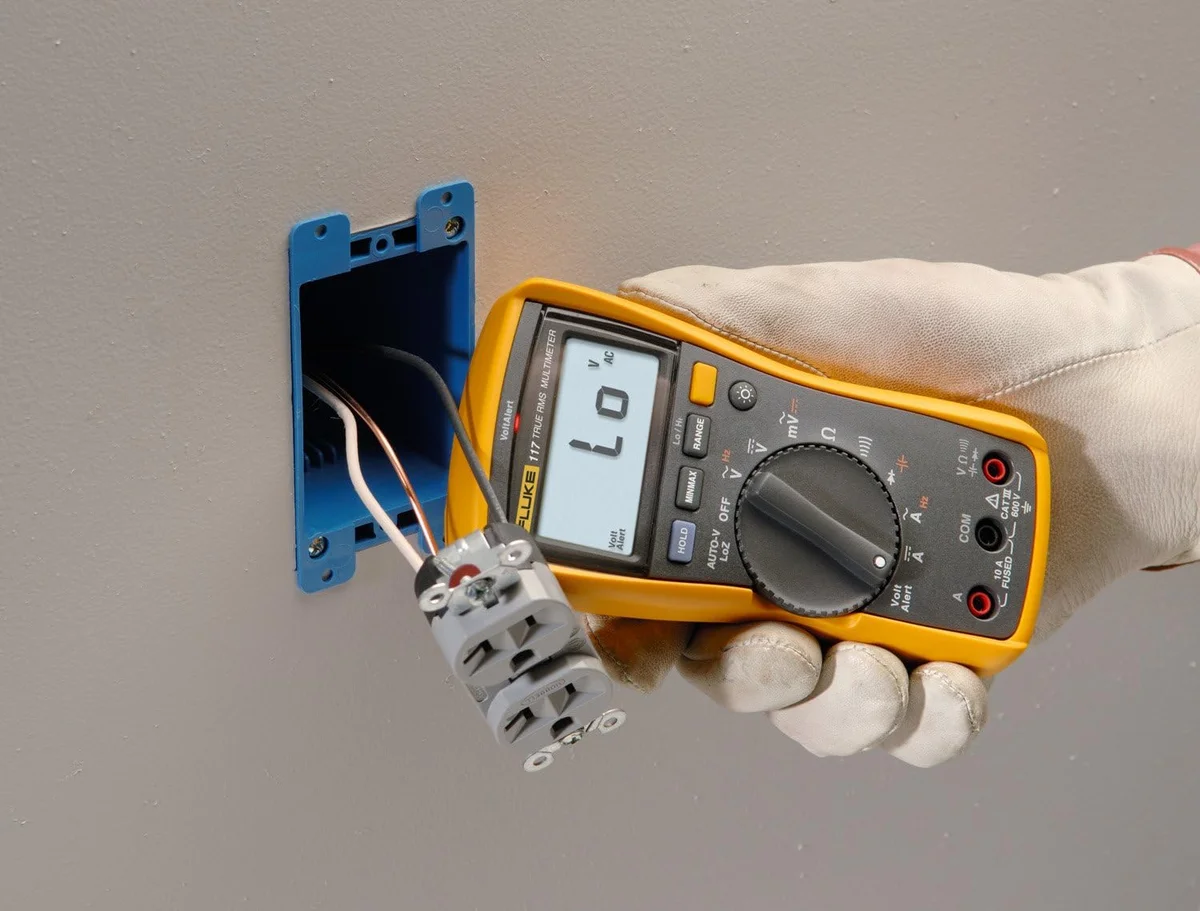
What separates it from a good budget meter is the low-impedance LoZ mode. On a long run of cable, induced voltage can make a cheap meter read 30 or 40 volts on a wire that is actually dead. LoZ drains that phantom charge so you read zero when it is zero, which is the difference between trusting your meter and second-guessing it. The built-in VoltAlert then senses live voltage without you touching a conductor at all.
It is True-RMS, auto-ranging, and reads AC or DC automatically, all in a body designed to run one-handed while your other hand is busy. At around $253 it is not cheap, but it is the tool a professional buys once and keeps for a decade under a Fluke lifetime warranty.
What It Won't Do
It skips a temperature function, which is odd given that the $40 AstroAI value pick includes a probe. If you do a lot of HVAC or motor work you will want temperature and peak capture, and for that the Fluke 87V is the better tool. The 117 is also a real investment, six times the price of the AstroAI, which is hard to justify if you only open the panel a few times a year.
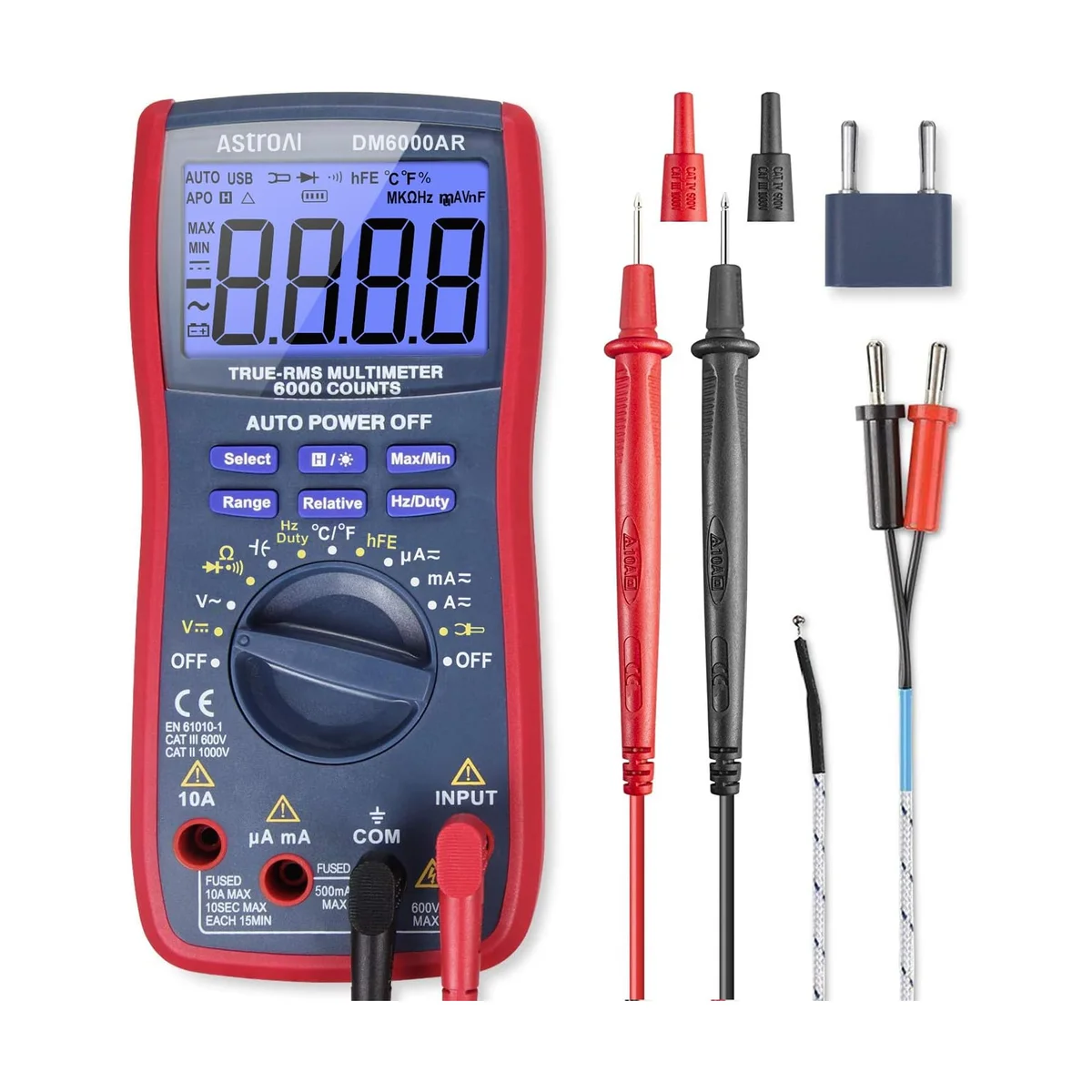
The AstroAI DM6000AR delivers most of what a homeowner or hobbyist actually needs for around forty dollars. It is True-RMS, auto-ranging, and reads to 6000 counts, and TechGearLab scored the AstroAI 6000-count model 80 out of 100, one single point behind the Fluke 117 that costs six times as much.
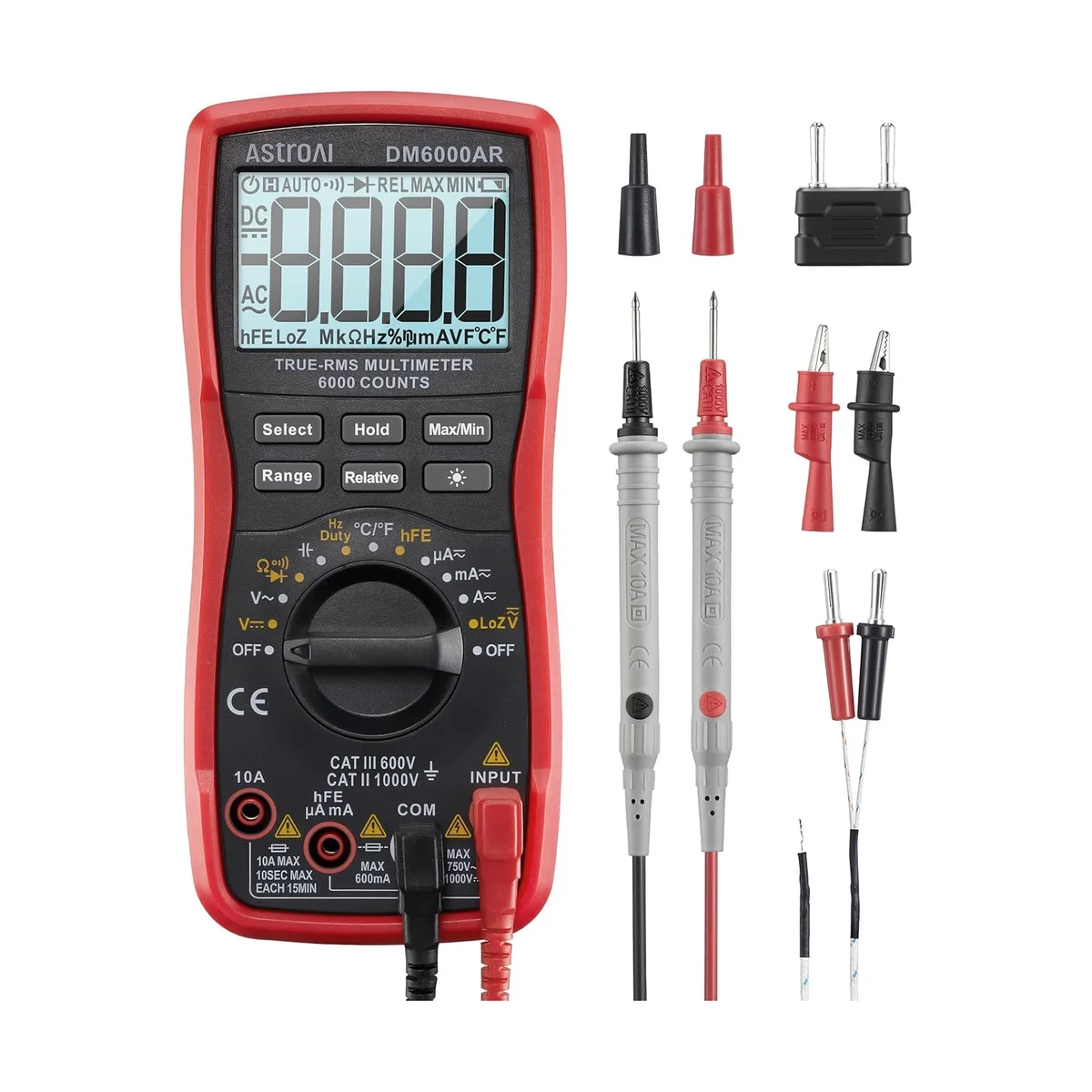
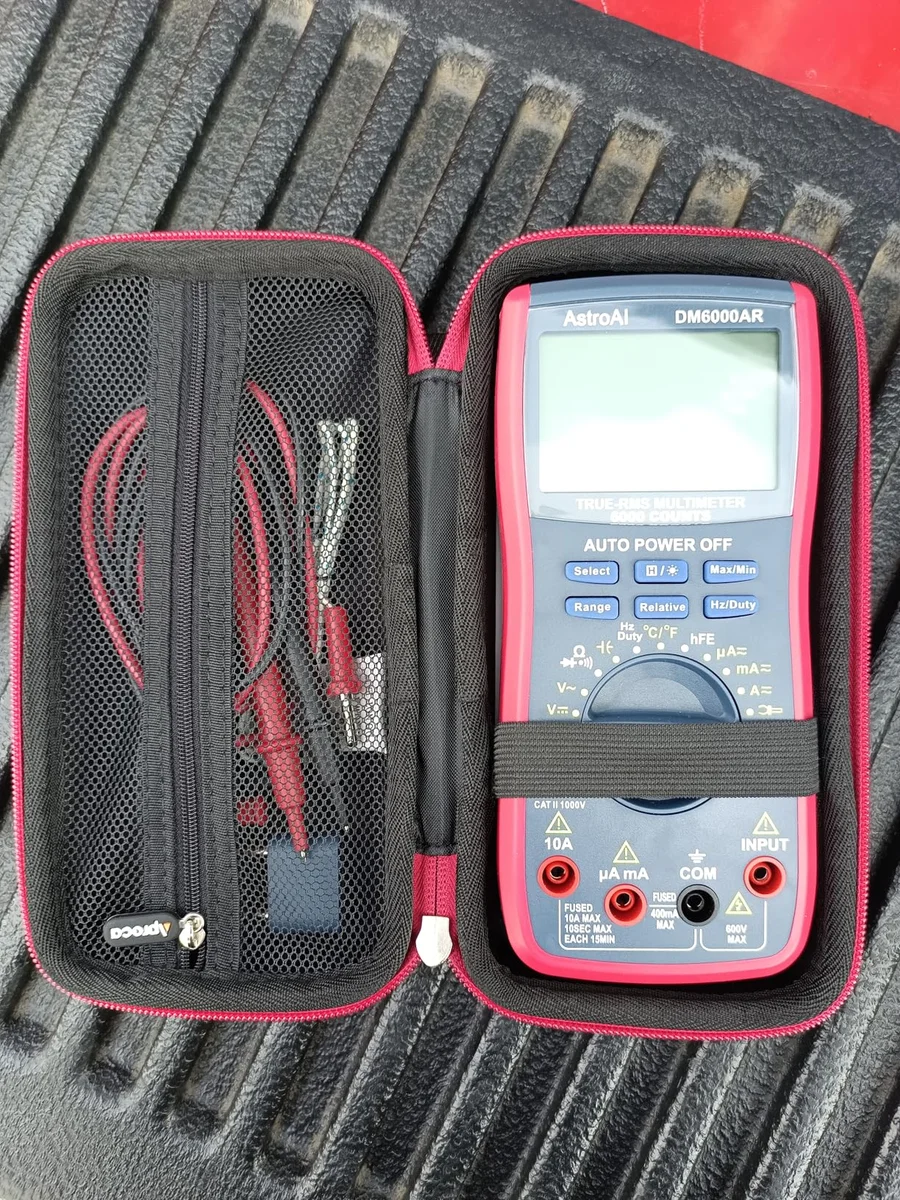
It even out-features the Fluke on paper in one respect: a temperature probe comes in the box, along with capacitance, frequency, and duty cycle. Approach Labs made it their featured budget pick, and it turned up in five of our seven sources, more than any brand except Fluke itself. For checking outlets, testing car batteries, chasing a blown fuse, or learning electronics, it does the job without asking you to spend pro money.
The honest caveat is safety depth. It carries a CAT III 600V rating but lacks the low-impedance ghost-voltage mode and the third-party safety listing of the pro meters. For work behind a live panel, that gap matters. For everything a typical homeowner does, it does not.
What It Won't Do
There is no LoZ mode, so on a long cable run it can show phantom voltage that a Fluke would reject, and a new user can misread that as a live wire. The CAT III 600V rating is self-stated rather than independently listed, and the leads and case are built to a price. It is the right tool for the workbench and the garage, not for a career spent inside live electrical panels.
Who Should Buy Which
Fluke 117
The electrician's standard, with ghost-voltage rejection built in
- Electricians who need a trade-standard meter with real ghost-voltage rejection
- Serious DIYers doing their own wiring who want to trust every reading
- Anyone who wants a meter they buy once and keep for a decade
- Buyers who value the built-in non-contact voltage alert
- Tradespeople who want Fluke resale value and a lifetime warranty
AstroAI DM6000AR
True-RMS and a temperature probe for around forty dollars
- Homeowners checking outlets, batteries, and fuses a few times a month
- Electronics hobbyists who want True-RMS and a temperature probe cheaply
- Car and RV tinkerers who need capacitance and duty cycle
- Students learning to use a meter without a big outlay
- Anyone who wants pro-adjacent features for around forty dollars